

SEO is significant in today’s digital space. The acronym stands for Search Engine Optimization. It’s needed by all businesses, both big and small, for a robust online presence. But, how does SEO link with website design? The connection is substantial, and we’re about to uncover the crucial aspects of SEO website design.
Grasping SEO
SEO aims to enhance a website’s visibility. The ultimate goal? Boosting organic or non-paid traffic. But you might question the real significance of SEO.
In the digital realm, being visible is the key. A well-optimized site ranks higher on search engines. High-ranking equals more traffic. More traffic results in enhanced brand visibility and better conversion rates. The end game is more sales.
SEO’s Mechanism
SEO functions by refining a website’s elements. It makes your website more appealing to search engines by employing a variety of strategies and techniques. These methods boost the site’s credibility and relevance. Consequently, search engines can understand and rank your site more easily.
SEO Website Design Essentials
Website design is not solely about aesthetics. It’s about creating a platform that is user-friendly. Effective website design zeroes in on usability thus prioritizing user experience and functionality, meaning it must be navigable and engaging. This will allow your website the capability to turn visitors into customers.
By taking these factors into account, your website will not only look good. It will also provide a seamless browsing experience for your visitors. By incorporating SEO into your website design from the start, you can achieve more. You’ll create a visually appealing site that also ranks high on search engine results.
Read more in our blog: Search Engine Positioning: All You Need to Know
Blending SEO into Website Design
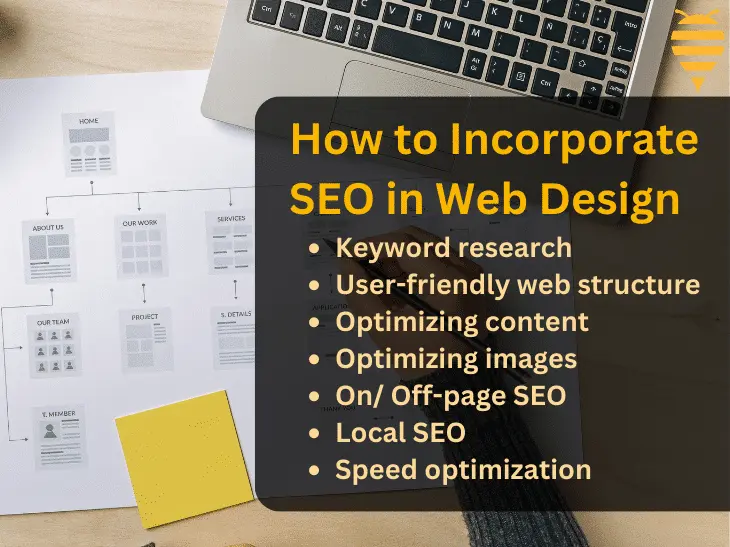
To create a well-optimized website, it’s essential to integrate SEO practices into your design process. Here are some key steps for this:
Keyword Research
Keyword research is the first step in SEO. This involves identifying the keywords and phrases that potential customers use when searching for your products or services. These keywords should then be strategically incorporated into your website’s content, meta tags, URLs, and alt texts.
Creating a User-Friendly Website Structure
A user-friendly website is essential for SEO. It helps search engines to understand your website content, making it easier for them to index and rank your pages. Such a structure includes a clear navigation menu, breadcrumbs, and an XML sitemap.
Optimizing Website Content
Quality content holds a high place in the world of SEO. It helps to attract and retain users, boost engagement levels, and improve the relevance and credibility of your website. Optimizing your content includes the strategic use of relevant keywords in content that provides valuable information to the readers while also being structured for easy readability.
Optimizing Images
Images are critical in website design, but they also need to be optimized for SEO. Image optimization involves reducing file sizes without compromising on quality, using relevant file names, and adding alt text for improved accessibility and better search engine rankings.
On-Page and Off-Page SEO
On-page SEO involves optimizing various elements on your website. These include meta tags, headings, URLs, and the internal linking structure. On the other hand, off-page SEO refers to actions taken outside of your website that can improve its ranking. This primarily involves acquiring backlinks from other reputable websites.
Local SEO
If you run a local business, incorporating local SEO into your website design can help improve your visibility in local search results. Optimizing your content, meta tags, and business listings with local keywords and relevant information can attract more local customers. Keep reading for more on how Swarm Digital Marketing can drastically improve your local SEO performance.

Speed Optimization
A slow-loading website can frustrate users and negatively impact your search engine ranking. Thus, speed optimization is an essential part of SEO website design. Techniques like optimizing code, compressing images, and leveraging caching can significantly enhance your website’s loading speed.
The Need for Mobile-Friendly Design
In today’s era, mobile devices dominate online searches. Hence, having a mobile-friendly design is not just an option; it’s a necessity. It improves user experience and impacts your website’s SEO performance. A responsive design ensures your website adapts and functions seamlessly on varying screen sizes and devices.
Should You Hire Professionals?
Our team at Swarm Digital appreciates the importance of SEO in website design, and we know that SEO is vital to maximize online visibility and attract targeted traffic. We understand that an attractive website alone isn’t sufficient. The site also needs to be search-engine-optimized for ensuring its success. Hence, we use innovative strategies and techniques for crafting SEO-friendly websites that rank higher on SERPs.
Swarm Digital Marketing uses advanced technology to drive local visitors to your website. With numerous search term variations in play, your website content should align precisely with these variations. Our proprietary software analyzes and identifies these variations. This ensures your website captures every relevant search opportunity. Contact us for a free consultation using the form below:
Contact form
- NameThis field is for validation purposes and should be left unchanged.
- first name*
- name
- email*
- phone*
- message
- CAPTCHA - What is 5+1*Please enter a number from 6 to 6.HINT: The answer is 6. Answering this helps us prevent SPAM. Thank you!
- CAPTCHA
Final Thoughts on SEO Website Design

SEO website design is the key to crafting a visually appealing, user-friendly, and high-ranking website. But, remember that SEO is not a one-off process. It needs continuous monitoring and updating to keep up with ever-evolving search engine algorithms. It’s crucial to stay informed about the latest SEO trends, algorithm changes, and industry best practices. Incorporating SEO strategies from the start of your website design ensures your site is not just attractive, but also ranks well on search engines. Comprehending and implementing the various components of SEO website design will boost your website’s visibility, organic traffic, and online business success.
FAQs
What is SEO website design?
SEO website design is the practice of optimizing a website during the design process to improve its visibility on search engine results pages (SERPs).
Why is SEO important for website design?
SEO is important for website design because it helps the website rank higher in search engine results, driving organic traffic and increasing visibility.
How does SEO impact the visibility of a website?
SEO impacts website visibility by optimizing its elements, making it easier for search engines to understand and rank the site, leading to improved visibility in search results.
What are the key components of SEO website design?
Key components of SEO website design include keyword research, user-friendly structure, optimized content, on-page and off-page SEO, mobile-friendliness, speed optimization, and local SEO.
What role does website structure play in SEO optimization?
Website structure plays a crucial role in SEO optimization as it helps search engines understand the site’s content, improving crawling, indexing, and ranking.
How can website content be optimized for SEO?
Website content can be optimized for SEO by creating high-quality, relevant content with proper keyword usage, heading tags, internal links, and meta tags.
What are some best practices for optimizing images in SEO website design?
Best practices for optimizing images in SEO website design include reducing file sizes, using descriptive filenames and alt text, and optimizing captions and titles.
What is the difference between on-page and off-page SEO in website design?
On-page SEO focuses on optimizing website elements like meta tags and content, while off-page SEO involves external actions like acquiring backlinks from reputable sites.
Why is mobile-friendly design crucial for SEO performance?
Mobile-friendly design is crucial for SEO performance because search engines prioritize mobile-friendly websites and provide a better user experience for mobile users.

Matthew Weitzman co-founded Swarm Digital to build the agency he wished existed, technical enough to actually fix what's broken, and honest enough to tell you the truth about it. He leads the engineering and SEO side of the business, from web-application architecture to the technical SEO that decides whether Google can even read a site. His approach is code-first: he'd rather solve a ranking problem at the source than paper over it with a plugin. He writes about SEO, web development, Core Web Vitals, and where AI is taking search.
See more articles by Matthew →